


For most healthy pregnancies, yes. Wearing non-toxic nail polish during pregnancy is generally considered low risk, especially when you get your nails done in a clean, well-ventilated space and don’t spend hours around strong fumes. Polish sits on top of a hard nail plate, and very little of it passes into your bloodstream. The more useful question is not only what is in the bottle, but also what you breathe in, what touches your skin, and how long you sit in the chair.
That matters if you plan to visit a Nail Extension Salon in Fairfax while expecting. A set of acrylics, gels, or dip powder involves more products than a quick polish change, so a little knowledge helps you choose well. This guide covers what “non-toxic” really means, what the research says, and how to plan a safe visit. It is general information, not medical advice, so check with your OB-GYN or midwife about your own situation.
Why Pregnant Clients Ask About Nail Polish
Pregnancy makes people read labels. Many clients tell us they used to grab any color without a second thought, then started wondering about every product that touches their skin. That is a reasonable instinct. Your body is doing a lot of work, and cutting out avoidable exposure where you can makes sense.
Pregnancy also changes your nails and your senses. Nails often grow faster and can turn brittle or soft. Your sense of smell may sharpen, so a scent that never bothered you can suddenly cause nausea. Hands and feet can swell too. All of this shapes what feels comfortable in a salon, and it is worth planning around.
What “Non-Toxic” Actually Means
The “Free” Labels, Explained
“Non-toxic” is a marketing term, not a legal standard. The numbered “free” labels give you something more concrete to check. Each number tells you how many ingredients of concern the brand left out of the formula:
- 3-free: leaves out formaldehyde, toluene, and dibutyl phthalate (DBP)
- 5-free: also leaves out formaldehyde resin and camphor
- 7-free: usually adds xylene and ethyl tosylamide to the list
- 9-free and 10-free: the list varies by brand and may include parabens, lead, or TPHP
Brands do not all use the same definitions for the higher numbers, so read the ingredient list rather than trusting the number alone.
Non-Toxic Does Not Mean Chemical-Free
Every nail product, even a gentle one, is made of chemicals: film formers, solvents, pigments, and resins. A non-toxic polish simply avoids the ingredients most often questioned for health reasons. It still needs ventilation, it can still trigger an allergy in some people, and it still belongs on the nail, not on the skin around it.
How Much Polish Chemistry Reaches Your Body?
Your nail plate is made of hard keratin, which blocks most of what you put on it, so absorption through the nail is low. The skin around the nail is a different story, since skin absorbs more than nail does. That is why a careful technician keeps polish and gel off your cuticles and skin.
Some small studies have found that certain polish ingredients, such as TPHP, can show up in the body after application. The levels were low, and that research has not established harm from occasional salon visits, but it explains why some people lean toward formulas without it. Nail technicians who work around these products all day face far more exposure than a client who visits every few weeks, which is why ventilation is a bigger topic for workers than for occasional guests.
Fumes and Ventilation Matter More Than the Polish
For most people, breathing is the main route of exposure at a salon. Polish, polish remover, glue, and acrylic liquid all release vapors. A few vapors are not a concern for an occasional visit, but a stuffy room with several people working on acrylics at once is not the place for a pregnant client.
Before you book, look at the room. Good salons have vents that pull air away from the tables, doors that open, and a space that does not smell sharply the moment you walk in. If the smell hits you hard, trust your nose and choose another time or place. Short visits help too: a polish change takes far less time than a full set of extensions, which cuts the hours you spend in the room.
Nail Extensions During Pregnancy
Acrylic
Acrylic is made by mixing a liquid monomer with a powder, and the liquid has a strong smell. Standard salon acrylic uses ethyl methacrylate (EMA). The FDA has advised against methyl methacrylate (MMA) in nail products, and several states restrict it, so ask what your technician uses. Because acrylic produces the strongest fumes of the extension types, many pregnant clients choose another option or limit how often they get it.
Gel and Gel Extensions
Gel products cure under a UV or LED lamp. The lamp exposure is brief, and dermatologists generally see it as low risk, though you can lower it further by putting sunscreen on your hands or wearing fingerless UV gloves. Gel has less odor than acrylic. One caution: uncured gel can cause allergic skin reactions, and pregnancy can make skin more reactive. A technician who keeps product off your skin protects you here.
Dip Powder
Dip powder skips the lamp and the liquid monomer, and the smell is usually mild. The main concern is hygiene. Ask whether the salon pours powder over the nail or dips every finger into a shared jar, because shared jars can pass bacteria between clients.
Removal and Upkeep
Removal often involves acetone, which has a sharp smell. Ask for foil wraps that limit evaporation, and sit near the vent. Also expect extensions to lift or need fills sooner than usual if your nails are changing during pregnancy. A good Nail Extension Salon in Fairfax will explain this honestly rather than selling you a full set you may not enjoy.
Pedicure Tips for Expecting Clients
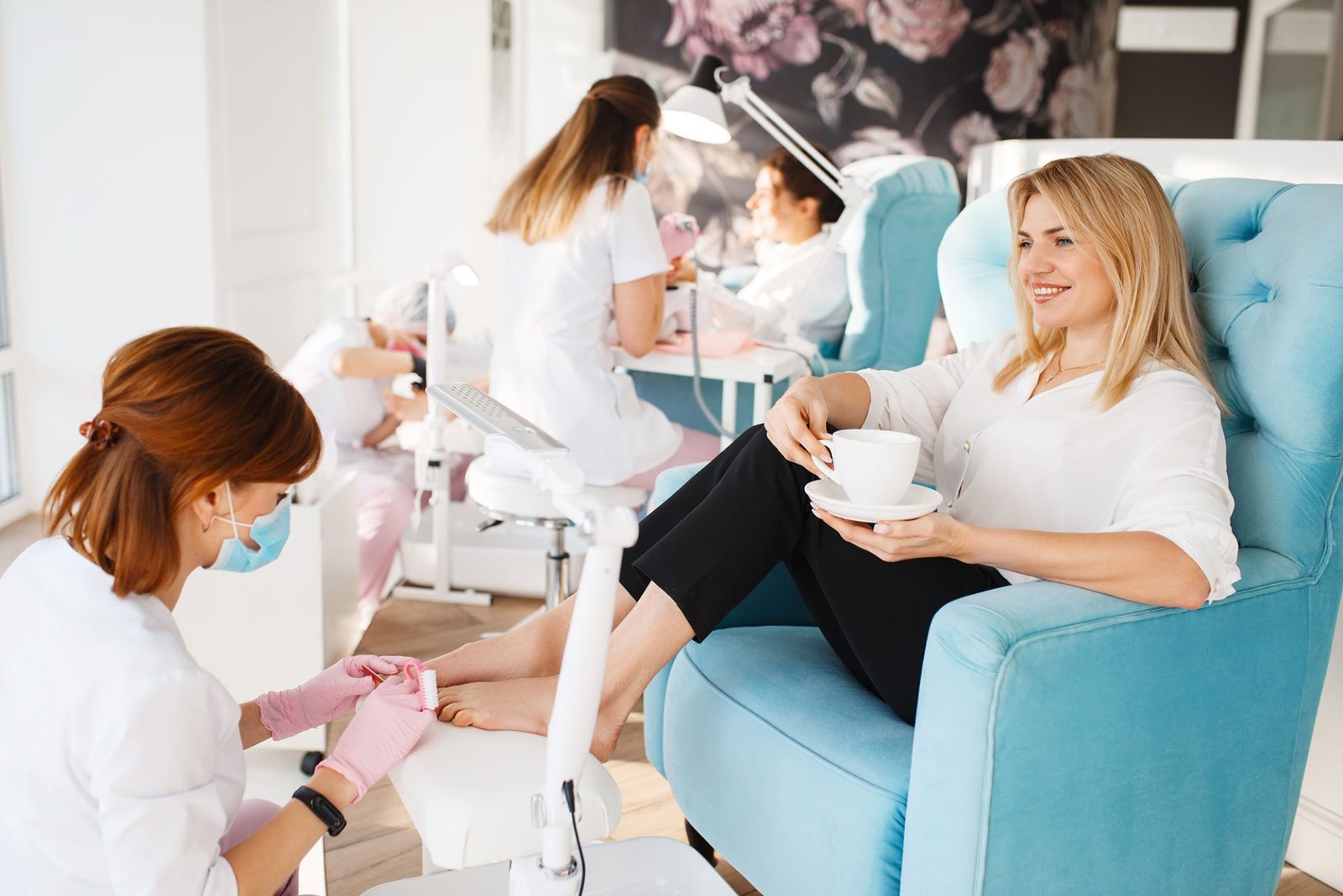
Foot care feels especially good when your feet are swollen, but keep a few points in mind. Skip water that is very hot, since overheating is not recommended in pregnancy. Pregnancy also raises the risk of blood clots in the legs, so ask your doctor before getting a deep calf massage, and tell your technician to use light pressure. Clean footbaths and properly cleaned tools matter more than usual, because an infection is harder to deal with when you are expecting. Skip aggressive cuticle cutting and callus shaving, and choose gentle filing instead.
Questions Pregnant Clients Ask Us
Is it safe to get polish in the first trimester?
Many doctors say occasional polish is fine, but the first trimester is when nausea and smell sensitivity tend to peak. If strong odors bother you, wait until you feel better or choose a short, low-odor service. Check with your provider if you are unsure.
Is gel polish safer than regular polish?
Neither one is clearly safer. Regular polish has a solvent odor, while gel has less smell but involves lamp exposure and a higher chance of allergic reactions. Choose based on how you feel and how often you want to come back.
Do I need to remove polish before giving birth?
Some hospitals ask patients to have at least one bare nail, because a pulse oximeter clips onto the finger and reads through the nail. Call your hospital and ask what they require, including whether gel or extensions need to come off.
Can I get extensions in the third trimester?
Often yes, but swollen fingers can change how nails fit and feel, and sitting for a long time may be uncomfortable. Book a shorter slot, take breaks, and bring a small pillow if it helps you stay comfortable.
What to Ask Before You Book
When you compare any Nail Extension Salon in Fairfax, ask three things: which brands and ingredients they use, how the room is ventilated, and how tools are cleaned between clients. A salon that answers without hesitation usually runs a careful operation.
At Organic Nails & Spa in Fair Lakes, we work with eco-friendly, non-toxic, organic-focused products and follow strict hygiene standards in a calm, spa-like space. If you are expecting, tell us when you pick a time that works for you, and we will plan the visit around your comfort, including service choice and timing.
When to Check With Your Doctor First
Speak with your provider before a salon visit if you have a high-risk pregnancy, severe nausea, asthma or breathing problems that flare with fumes, skin allergies, or diabetes. Stop a service if you feel dizzy or short of breath, or notice itching, redness, or burning around the nails, and tell the staff right away.
The Bottom Line
Non-toxic nail polish is generally a low-risk choice during pregnancy, and an occasional visit is unlikely to cause problems when the room is ventilated, tools are clean, and you pick services that suit you. Focus on air quality, ingredient lists, hygiene, and how you feel in the chair. Your doctor has the final say on anything specific to your health.
Ready for a relaxed visit that respects your pregnancy? Book your appointment with Organic Nails & Spa or send us a message through our contact page, and mention that you are expecting. We would be glad to be your Nail Extension Salon in Fairfax for fresh polish, a pedicure, or a new set.