


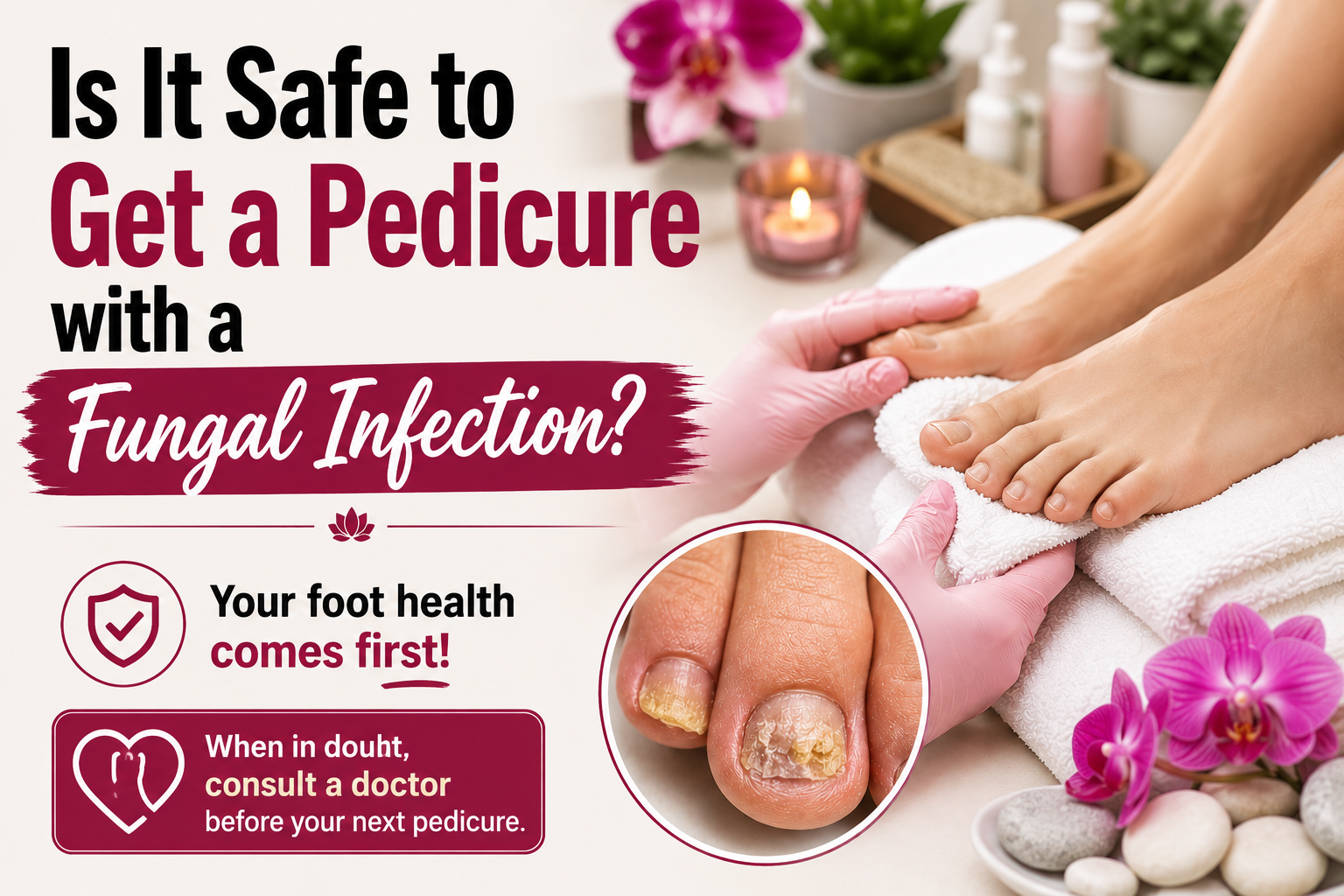
A toenail fungal infection is more common than most people admit out loud. It shows up as a yellowish or thickened nail, sometimes with a crumbly edge or a faint odor, and it usually doesn’t go away on its own. So when a pedicure appointment is already on the calendar, a natural question comes up: is it actually safe to sit down for a pedicure in Fairfax VA while dealing with a fungal nail? The short answer is that it depends on the type of infection, how far it has progressed, and how the salon handles sanitation. Here’s what you need to know before your next visit.
Understanding Toenail Fungus Before You Book
Toenail fungus, medically known as onychomycosis, is caused by microscopic organisms that thrive in warm, damp environments — think sweaty socks, shared pool decks, and closed shoes worn for hours at a time. It spreads through direct contact or through contact with contaminated surfaces like nail files, foot baths, or towels.
Common signs include:
- Nails that turn yellow, brown, or white
- Thickened or misshapen nail plates
- Nails that become brittle and break easily
- A slightly foul smell coming from the affected nail
- Separation of the nail from the skin underneath
If you notice these symptoms, it’s worth pausing before booking a routine service and instead thinking through your options first.
Can You Still Get a Pedicure with a Fungal Infection?
In many cases, yes — but with precautions. A mild fungal infection limited to one or two nails is not automatically a reason to cancel your appointment. What matters most is transparency and technique. A reputable salon offering a pedicure in Fairfax VA should be told about the infection ahead of time so the technician can adjust their approach, use separate or single-use tools, and avoid aggressive filing that could spread spores to nearby nails or to other clients through shared equipment.
That said, a pedicure will not treat or cure the infection. Polish, especially gel or acrylic overlays, can actually make things worse by trapping moisture underneath the nail and creating an ideal environment for the fungus to multiply. Covering an active infection with polish is a bit like sealing a plant in plastic wrap — nothing gets the airflow it needs to dry out and heal.
When You Should Skip the Appointment
There are situations where it makes more sense to hold off on a salon visit altogether:
- The infection has spread across multiple nails or into the surrounding skin
- There is visible swelling, redness, or pain around the nail bed
- Pus, bleeding, or an open sore is present near the nail
- You have diabetes, poor circulation, or a compromised immune system
- The nail has partially or fully separated from the nail bed
In any of these cases, a trip to a podiatrist or dermatologist should come before a trip to the salon. Fungal infections can worsen quickly in people with underlying health conditions, and professional medical treatment — often an antifungal cream, oral medication, or in some cases a topical lacquer — is the more appropriate first step.
Why Sanitation Standards Matter More Than Ever
Nail salons handle dozens of clients a day, and tools like foot files, cuticle nippers, and pumice stones can carry fungal spores from one client to the next if they aren’t properly cleaned. This is exactly why sanitation protocol should be at the top of your list when choosing where to book a pedicure in Fairfax VA.
Before your appointment, it’s reasonable to ask:
- Are metal tools autoclaved or sterilized between clients?
- Are foot bath liners disposable and changed for every guest?
- Are files, buffers, and pumice stones single-use or assigned only to you?
- How is the pedicure bowl or basin cleaned between appointments?
A salon that answers these questions confidently and without hesitation is generally one that takes hygiene seriously — which matters for every client, not just those managing a fungal issue.
What a Fungal-Safe Pedicure Should Look Like
If your nail technician agrees to move forward with your service, a few adjustments should be visible during the appointment. The technician should avoid cutting or aggressively pushing back the cuticle near the affected nail, since any small break in the skin gives the fungus an easier path to spread. Filing should be gentle, and any tools used on the infected nail should either be disposable or thoroughly sterilized afterward rather than reused on the next client. Polish application on the infected nail itself is often skipped or minimized, while the rest of the pedicure — soaking, exfoliation, massage, and polish on unaffected nails — can proceed as normal.
Home Care Between Salon Visits
Whether or not you decide to book a professional appointment, there are habits that support healthier nails between visits:
- Keep feet dry, especially between the toes, after showering
- Wear moisture-wicking socks and rotate shoes so they fully dry out
- Avoid walking barefoot in communal showers, locker rooms, or pool areas
- Disinfect your own nail tools and avoid sharing files or clippers
- Trim nails straight across rather than rounding the corners
None of these habits will eliminate an existing infection, but they reduce the chance of it spreading or returning after treatment.
Treating the Infection Long-Term
A pedicure is a cosmetic service, not a medical treatment, so it’s worth setting realistic expectations. Over-the-counter antifungal treatments can help with very mild cases, but they often take months to show results because toenails grow slowly. More stubborn infections typically respond better to prescription options from a healthcare provider. Patience matters here — most people see gradual improvement over several months rather than an overnight fix, and reinfection is common if footwear and tools aren’t also addressed.
Choosing a Salon That Handles This the Right Way
Not every salon is equipped, trained, or willing to work around an active fungal infection, and that’s actually a good sign rather than a red flag. A salon that turns away certain cases or recommends modifications is one that’s thinking about the wellbeing of all its guests, not just the appointment in front of them. When searching for a pedicure in Fairfax VA, it’s worth choosing a spa that uses separate tool sets, disposable liners, and staff who are trained to recognize when a service should be adjusted or postponed.
Organic nail salons in particular tend to lean toward gentler products and techniques overall, which can be a plus for anyone managing sensitive or compromised nails. Non-toxic, breathable formulas are less likely to trap moisture the way heavier synthetic products can, giving nails more of a chance to actually recover between visits.
Final Thoughts
A fungal toenail infection doesn’t necessarily mean canceling your self-care routine altogether, but it does call for a little extra communication and caution. Being upfront with your nail technician, understanding when a medical visit should come first, and choosing a salon with solid sanitation practices all go a long way toward keeping your feet — and everyone else’s — healthy. If you’re ever unsure whether your case is mild enough for a routine visit, checking with a podiatrist beforehand is always the safer route.
Healthy, well-cared-for feet start with the right combination of professional guidance and consistent at-home habits, and a little patience along the way makes all the difference. At Organic Nails & Spa, our team is trained to handle these situations with care, so you can feel confident every time you walk through our doors.